Materiality and Certainty: The New Era of Customs Brokerage in Mexico
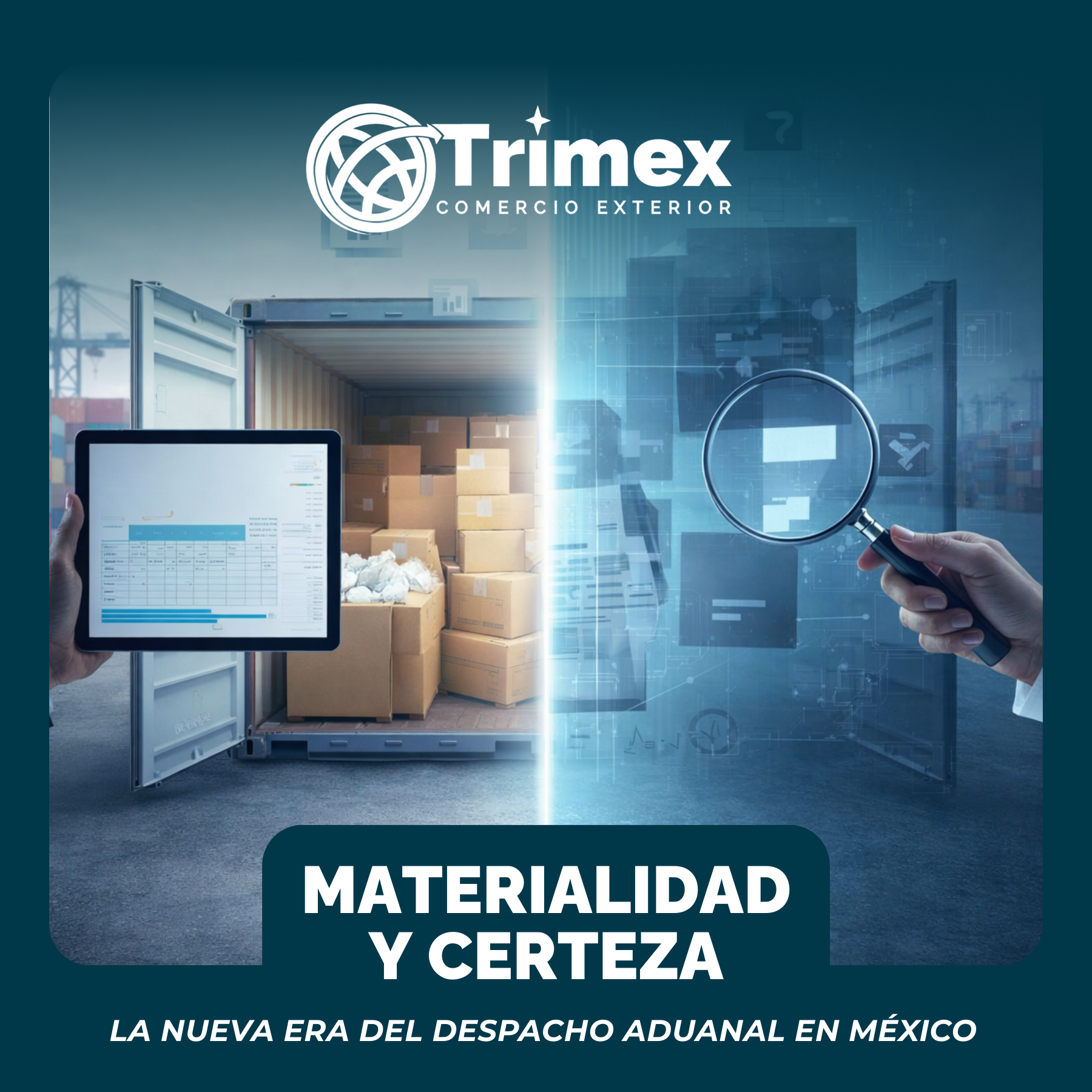
Foreign trade in Mexico has evolved from a simple border crossing procedure into an ecosystem of high-level fiscal oversight. Today, authorities (such as SAT and ANAM) own advanced technological tools and a reformed legal framework that demands much more than just a paid Customs Declaration (Pedimento): they demand materiality, traceability, and absolute transparency.
At Trimex, we understand that the security of your cargo depends on the solidity of your information. That’s why we’ve compiled the essential keys for importers and exporters to safeguard their operations in this new regulatory landscape.
1. From the Traditional File to the "Master File"
Formerly, compliance meant simply having your invoice, the Pedimento, and basic annexes. Today, that falls short. Authorities seek to verify Business Substance (Razón de Negocios); that is, to confirm that your company truly exists, has operational capacity, and is not a "shell company."
To achieve this, it is vital to integrate what we internally call the Master File, in compliance with the obligation to maintain documentation that proves the legal origin and stay of goods (Article 59, Section V of the Customs Law and Rule 3.1.42). This file must be available to your Customs Broker prior to operations and demonstrate your infrastructure through:
-
Fixed Assets: Ownership of machinery and equipment necessary for your production process.
-
Real Estate: Lease agreements ratified before a notary or property deeds for your warehouses and offices.
-
Human Capital: Evidence of real personnel (IMSS enrollment) to carry out the commercial activities you declare.
2. Financial Traceability: No Loose Ends
Money laundering prevention and customs oversight now go hand in hand. The authorities need to see a clear line connecting the merchandise, the supplier, and the payment.
-
Contracts & Purchase Orders: A commercial invoice is no longer enough. We strongly recommend having sales contracts or, at a minimum, detailed purchase orders (including Incoterms, pricing, and payment terms) that function as a binding "meeting of the minds."
-
Third-Party Payments: If a third party pays on your behalf, or you pay an entity other than the supplier, you must have solid, documented legal justification. Non-transparent relationships generate immediate alerts with the Financial Intelligence Unit (UIF).
3. Technical Identification: The Risk of "Assumption"
One of the costliest risks in current customs practice is inaccurate tariff classification derived from poor product identification.
An error in the chemical or technical composition of your merchandise can lead not only to cargo retention but also to fines of 250% of the commercial value, or even contraband charges if it is determined that the product requires permits that were not presented (as occurs with hydrocarbons or chemical precursors).
Our recommendation: Do not assume you know your product solely by its commercial name. Request updated technical sheets from your suppliers and, if in doubt, invest in pre-clearance lab analysis. It is better to wait for a technical ruling than to face a precautionary seizure (embargo precautorio).
4. Technology vs. Technology
The SAT already utilizes Artificial Intelligence and Big Data to process millions of data points and cross-reference information between customs and domestic taxation. If the authorities use technology to audit you, you must use it to prevent issues.
It is indispensable for companies to have their Foreign Trade Security Matrix (Data Stage) to gain visibility into what the authorities see regarding their operations and ensure it matches their accounting records.
5. Co-Responsibility: Your Customs Broker is Your Compliance Ally
Under the new reforms, the Customs Broker acts as an oversight filter. If we request deep information about your partners, suppliers, or processes, it is because the law requires us to certify that your operation is lawful and secure.
Confidentiality is absolute, but transparency must be mutual. An importer who conceals operational information from their Customs Broker is, involuntarily, raising their own risk level.
Conclusion
The era of improvisation in foreign trade is over. Today, materiality is just as important as the merchandise itself. At Trimex, we don’t just dispatch your cargo; we help you build the documentary and legal structure your business needs to operate with peace of mind in the long term.
Is your file ready for an electronic audit? Let’s review it together.
Contact: info@trimodalmx.com
.png)